Category: Ancient history

  • The Sensitive Plant at Ghana’s Last Bath

    The Sensitive Plant at Ghana’s Last Bath

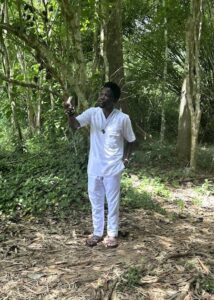
    Our prolific tour guide, Devine at the Last Bath, Assin Manso, Ghana
    Our prolific tour guide, Devine at the Last Bath, Assin Manso, Ghana


    It was an unexpected discovery along the winding, sometimes muddy path leading to what is solemnly known as the Last Bath in Ghana.

    Just moments earlier, our guide, Devine, was sharing rhythmic and powerful stories of survival of the men and women whose lives were violently uprooted centuries ago and forced toward an uncertain future across the Atlantic Ocean. His voice carried through the trees as he recounted the journeys of those who passed through this place in chains.

    Then, as Devine’s leather sandals were striding down the lightly muddy path, he stopped.

    The World’s “First” Security System

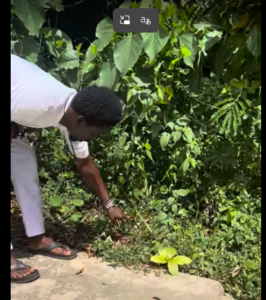
    Kneeling beside a place in the path, he pointed to a small patch of greenery and invited several of us to gather around.

    “This,” Devine said with a comforting smile, “was the first security system.”

    With the gentle touch of his finger, the tiny plant immediately recoiled. Its delicate leaves folded inward as though retreating from the world. Devine explained that the plant, commonly known as the Sensitive Plant (Mimosa pudica), would slowly reopen several minutes later. According to the stories that he shared, the plant’s sudden movements was an alert system for those who may have “disturbed the area.”

    “It was a secret system the ancestors used to protect their lands. We still have it here.” He said that if it were not for the grass that has grown up around the special plants, the visitors would be walking on the Sensitive Plant on the way to the actual river of the Last Bath.

    “They know that they have seven minutes to catch up with them. After seven minutes it opens back fully and they lose the trail,” explained Devine.

    He said the ancestors “were using it as their secret motion sensors. Whenever the ancestors came out to see the plant closed, they knew that something” been there. There is nothing on this earth that is invented by anyone else. Today, you are seeing the proof of our intelligence”.

    He referred to the plants as being the equivalent to the modern Ring Door security device: “The most amazing thing is that the security system itself was invented by an African American woman.” He was referring to Marie Van Brittan Brown, an African American nurse, co-invented the first home security system in 1966 with her husband, Albert L. Brown, an electronics technician.
    The demonstration lasted only a few seconds, but its symbolism lingered much longer.

    Standing at Assin Manso’s Last Bath, a place where countless Africans endured unimaginable loss before beginning the final stage of their forced journey to the coast, I could not ignore the metaphor. Generations of African Diaspora families have carried memories that folded inward for protection. Through genealogy, oral history, and return journeys to places such as Ghana, those memories slowly begin to open again.

    The Last Bath

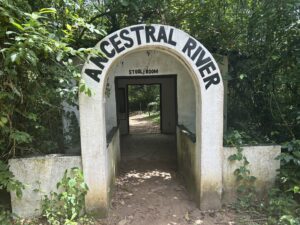
    More than 100 miles from Accra, Ghana’s capital city, lies the community of Assin Manso, home to one of the most emotionally significant sites in Ghana’s remembrance landscape. Located within the Assin Manso Ancestral Slave River Park, the Last Bath marks one of the final inland transfer points for many enslaved Africans before their forced march to the slave dungeons at Cape Coast and Elmina.

    Here, according to historical accounts, captives were brought to the river to bathe before continuing toward the coast. For many, it would be their last physical contact with the interior lands of Africa before boarding ships bound for the Americas and the Caribbean.

    We reached the river entry point.  We slowly and assuredly walked down the path to the waiting arms of our guide, who had gotten in the waist high water.  The water, he observed was higher than in previous years. While the waters were rolling, there was a striking peace.  Birds sing from a distance. The trees seemed to welcome its visitors as the branches were swaying gently in the warm breeze. Most of the visitors entered the river, including this writer. It is a cleansing and connecting feeling to African ancestors like no other experience while in this region of Ghana.

    Beneath the somberness rests the weight of countless untold stories that would never be known for their lives were lost either through death along the hundreds of miles of marching to an unknown fate, or through the separation and ultimate travel across the Atlantic Ocean to reach lands they never knew.

    Lessons from a Small Plant

    As the leaves of the Sensitive Plant gradually reopened, our guide reflected on the lessons it offers visitors:

    • Memory can be hidden but not lost.
    • Trauma may cause individuals, families, and communities to close themselves in self-protection.
    • Healing often happens slowly, one layer at a time.
    • What appears dormant may still be very much alive.

    Whether those meanings are found in nature itself or assigned through human reflection hardly matters. At Assin Manso, the symbolism feels undeniable.

    For descendants of the African Diaspora, family history often unfolds in much the same way. Names disappear. Stories fade. Connections seem lost. Yet many symbols such as a documents, oral histories, conversations, DNA matches, or a long journey across the ocean, touches the past and awakens memories  that may been long folded away.

    Interesting finding was right in my backyard. When comparing the look of the Mimosa pudica, I noticed that the leaves of one tree always blooms into a pattern that is identical to Assin Manso’s Secretive Plant. Without any scientific or other professional explanation, it appears the plant was transplanted to my backyard tree.
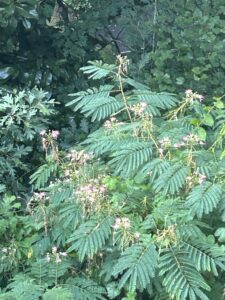
    My backyard tree is in full bloom as a Mimosa plant descendant
    My backyard tree is in full bloom as a Mimosa plant descendant

    Like the Sensitive Plant, those stories begin to open again.
  • “Uncovering African Roots: The Fascinating Link Between Twin Births and Ancestry Heritage” Keywords: Twin births, African roots, Heritage, African heritage, Genetic link, Ancestry DNA

    “Uncovering African Roots: The Fascinating Link Between Twin Births and Ancestry Heritage” Keywords: Twin births, African roots, Heritage, African heritage, Genetic link, Ancestry DNA

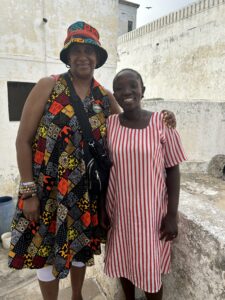
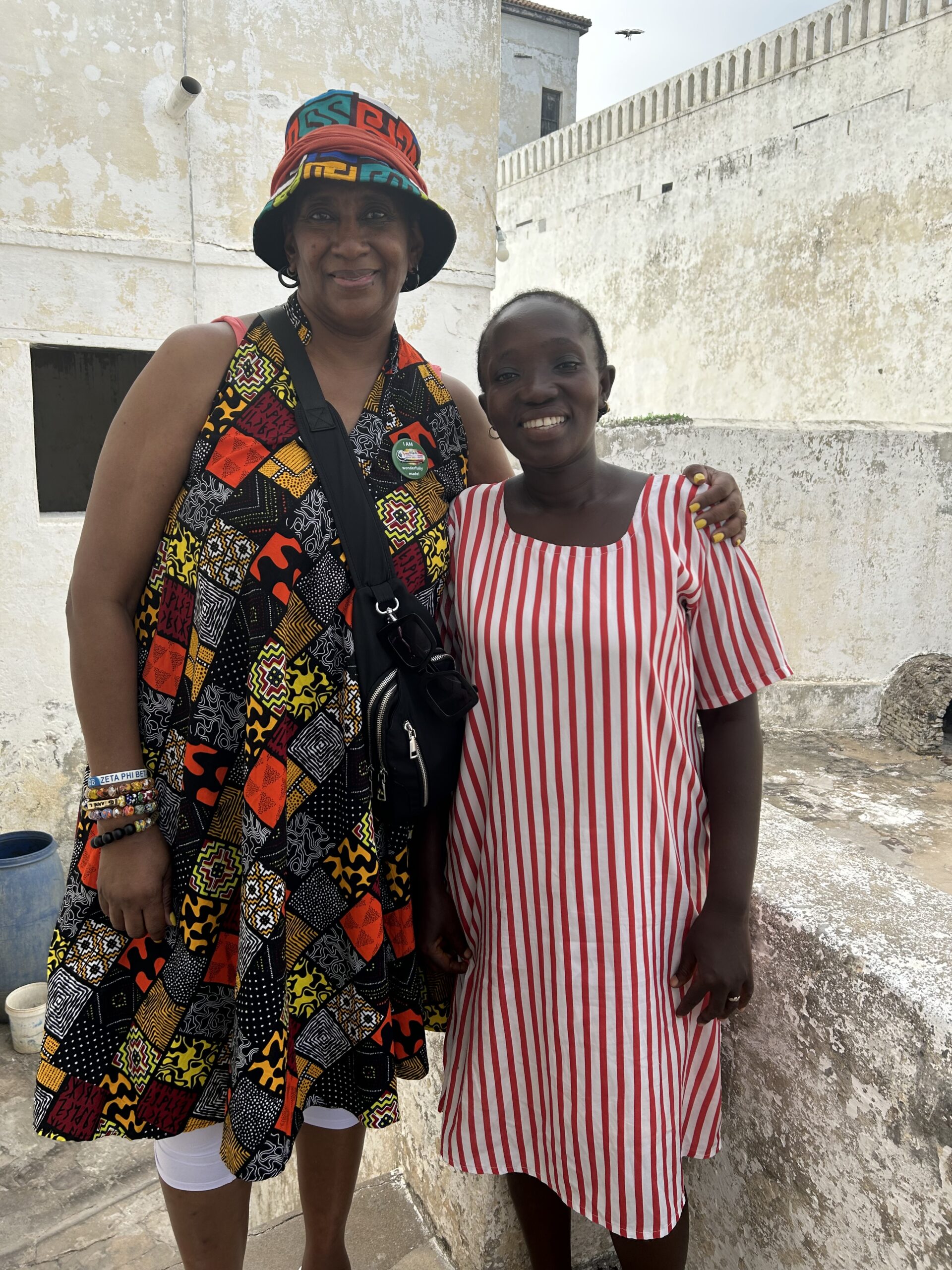
    Mothers of fraternal twin children: From left, Blog Author Ann aka Ama (born on Saturday)  and "Abena" (born on Tuesday) at Elmina (Ghana) Slave Dungeon
    Mothers of fraternal twin children: From left, Blog Author Ann aka Ama (born on Saturday) and “Abena” (born on Tuesday) at Elmina (Ghana) Slave Dungeon

    Who knew that giving births to fraternal twins would be a strong linkage to connecting African Diasporan families? Do twins “run in your family?”

    In African diasporan genealogy, I’ve found several clues that live within me as a fraternal twin mother, and within so many other African, African American, Brazilian, Caribbean women.  In short, twin births are the highest among Black women in these regions of the world. By contrast, fraternal twin births are low in Europe and the lowest in East Asia.

    I’ve been curious about the birth of twins since my boy and girl set were born some forty years ago at Georgia Baptist Hospital in Atlanta, Georgia USA.  Each time I’ve visited Africa since 2010, I’ve met mothers of twins, family members of twins, and of course, twins. The intersting feature is that often fraternal Black twins — that is, not identical ones — do not necessarily have similar outward features. I have a sense that some combinations of people are twins and that is how I often make such connections on USA, Caribbean and African soils.  On an April 2026 visit to Ghana’s Elmina community, I easily located a mother of fraternal twin children (pictured, on right). She, too, had a boy and girl twin who were soon to celebrate a milestone birthday.

    Diaspora Connection

    The same regions in West Africa known for higher twinning rates are also regions where many our enslaved Africans ancestors were trafficked from. It is interesting that elevated rates of fraternal twins among African-descended populations in the U.S., Caribbean, and Brazil. I met groups of people from northeast Ghana who are connected to Brazil.

    This is more than a statistic—it is continuity. Even after the forced enslaved passages across the Atlantic Ocean where we are still piecing together generations of separations, something remained.

    Fraternal twinning that is mostly linked to West African ancestry is a huge genealogy search clue. This inherited trait traveled across generations during the Trans-Atlantic Slave Trade and still appears in families today. For genealogists that include me, and for all family researchers, twin births are helping to trace maternal lines.

    This means that we can reconnect with our ancestors through another familial linkage and remind us that even when records are long gone, our fraternal twin ancestry leaves a wonderful mark.

    Twins as Genealogical Clues

    As we comb through government and other historical records, be on the look out for the following clues about your family that will likely help to further identify African geographical and genealogical linkages:

    • Two children listed with the same age and date of birth in early Census records;
    • Probate, plantation, church and other social documents referring to “twins”;
    • Oral family stories about the “two born together”; and
    • Repeated twin births on maternal sides of our families.

    I’ve located twins on my paternal and maternal family lines based on the connection of birth dates. It is shoring up my family’s linkage to West Africa.

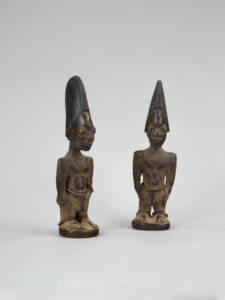
    In most of West Africa, the birth of twins is considered a significant sign from the gods. Amongst the Yoruba they are thought to bring good luck -- St. Louis Art Museum
    In most of West Africa, the birth of twins is considered a significant sign from the gods. Amongst the Yoruba they are thought to bring good luck — St. Louis Art Museum

    More Than a Coincidence

    For those who are interested in the science of twinning, fraternal twins happen when a woman releases more than one egg during ovulation. Research shows this occurs more often in some West African populations than anywhere else in the world. That means it may not be random when repeated twin births occur in a family line—especially across generations.  Our ancestors and today’s Black families often remark that “twins skip a generation” or something similar when explaining the phenomenon of twin births within families.

    For instance, my maternal grandmother gave birth to fraternal twin daughters. Skipping a generation, I birthed fraternal twin children — John and Jocelyn.

    Several recent studies track twin births in West Africa. According to a study of data from 135 countries by the University of Oxford’s Christiaan Monden and his colleagues published in 2020, the Ivory Coast had a rate of 24.9 twins for every 1,000 births during 2010 – 2015.   The report found that Ghana and South Sudan had the second-highest twinning rate, each with 24.8 twins per 1,000 deliveries, followed by Liechtenstein on 24.7 per 1,000. About 1.6 million twins are now born worldwide each year.

    “The twinning rate in Africa is so high because of the high number of dizygotic twins – twins born from two separate eggs – born there.” He continued, “This is most likely to be due to genetic differences between the African population and other populations,” explained researcher Monden.

    Next steps

    We spend our time in genealogy and ancestry research searching for what was lost.  Things and people are not really lost, all are simply unrecognized.

    Twin births remind us that our ancestors left patterns, traits, and living evidence of who they were and where they came from. Even in the absence of records, the body remembers.

    Our stories are told in pairs.


  • Breaking Barriers: Uncovering the Truth Behind Obstacles in African Diasporan Research

    Breaking Barriers: Uncovering the Truth Behind Obstacles in African Diasporan Research

    Washington, D.C.-based Museum is threatened with funding cuts by the government

    Deliberate Attempts to Block African Diasporan Research

    The history of the African diaspora is a rich and complex tapestry, woven together with the blood, sweat, and tears of countless innocent Africans were who forcibly stolen from their once beautiful homes, palaces, and other grand estates. After enduring horrible conditions, they were shipped across the Atlantic Ocean and scattered across the globe. This diaspora has had a profound impact on the cultural, economic, and political landscapes of the countries where Africans were brought and has sparked a growing interest among family members on United States shores and researchers from around the globe.

    One example is that once per month, I offer a free workshop for families seeking their ancestral linkages. It has grown from approximately 20 persons to more than one hundred in-person participants.

    Intended Hinderance

    Lately, I’ve encounted not-so-surprising roadblocks. There are several intentional activities in place to further thwart legitimate research efforts by genealogists like me and dedicated family members who simply wish to trace their roots to the ancestors who are waiting for us to discover them.

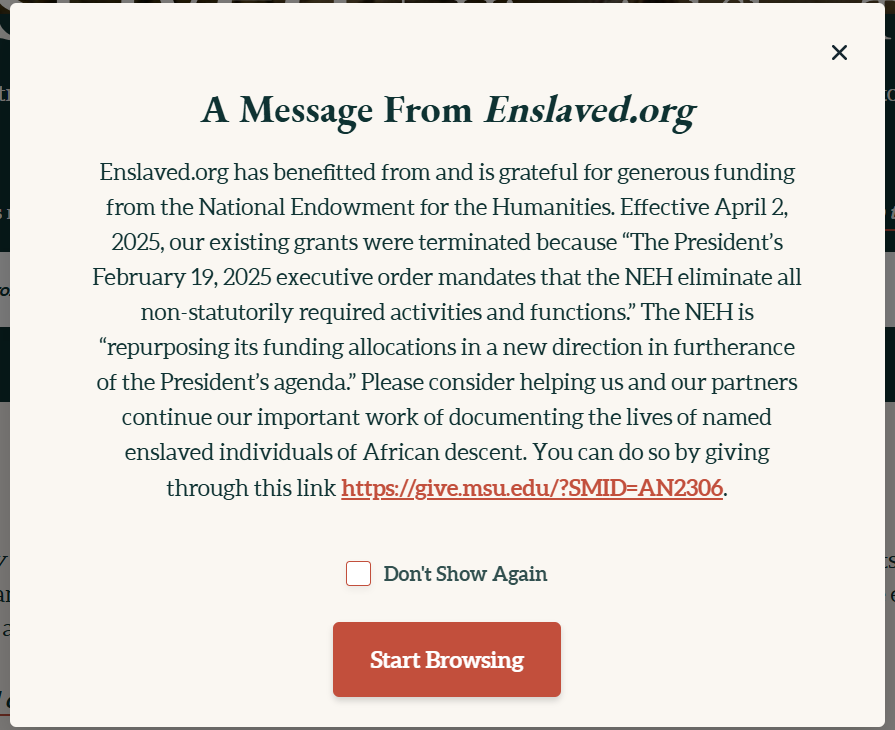
    The pop-up notice on the enslaved.org website is an example of the “new normal” that is directed from 1600 Pennsylvania Avenue, Washington, D.C.


    Enslaved.org
    Enslaved.org is the latest in several research sites that are losing U.S. funding due to new “priorities”

    There are countless other related efforts to shut down organizations that are providing information about U.S. history; Black history and African Diasporan history is U.S. history.


    Support African Diasporan research

    The deliberate attempts to block and hinder African diasporan research threaten to erase and silence the voices and experiences of those who have been historically marginalized, is unfortunate. This denial of information and knowledge not only prevents us from fully understanding our past, but also hinders our ability to create a more equitable and just future.

    We must also consider the benefits of supporting and promoting African diasporan research. By allowing diverse perspectives to be heard and studied, we open up the possibility for important and groundbreaking discoveries that can shape and enrich all fields of study. Additionally, this research can have a positive impact on communities and individuals who have been historically marginalized, by giving them a voice and validating their experiences.

    Purposeful moves to block African diasporan research have far-reaching and damaging consequences. By understanding the unique features of this subject, and acknowledging its value and benefits, we can work towards breaking down these barriers and fostering a more inclusive and accurate portrayal of our shared history.


  • Free global conference for Ancestry researchers

    Free global conference for Ancestry researchers

    We always look for clues to our ancestors’ great lives through lots of tried-and-true research methods, many of whom I’ve recommended. Here’s a global conference that looks at the ancient stories of the special ancestors who may or may not be in our lineage. I’ve attached the schedule. Check out freebie global conference