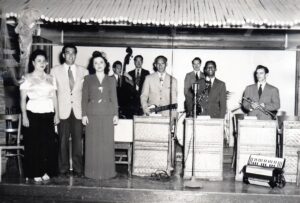
Army Vet and Maternal Great Uncle Ernest Wilks (second right) and his band in Hawaii
Gotta love the family stories!
I’ve interviewed CEOs, community activists, a future U.S. Supreme Court justice, and lots of individuals who were skeptical of media members. It’s an art and a science to prepare for such sessions with individuals who are new acquaintances willing to share parts of their life stories to public audiences.
Yet, no academic and OJT prepared me for asking personal questions of relatives to learn more about our family.
“How did you and grandpa meet?” “What was it like to grow up in the Delta of Arkansas and witness the bloody riots in the early 1900s?” “Who are you named for?” “Did you really beat up a woman who knew your husband?” “Why didn’t you ever learn to drive?” “How did you celebrate Christmas when you were a child?”
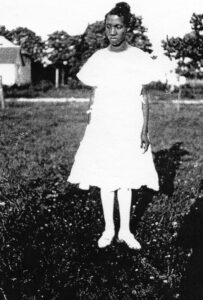
Maternal great-grandmother Edna Robinson
Those are just a small sample of questions that I posed to my various family members. Their answers helped to connect the dots for me as I sought to uncover my family’s history. Like other African American families, our stories are mostly spotty and tough to easily put together. That’s why getting as much information from your relatives is imperative to completing your legacy findings.
The art of the interviews
The holidays and other special days are great times to listen to the conversations among family members. That’s the first tip: listen to what is being said and not said among your family member.
Next, build upon the unanswered questions and ask questions. You may not get the answers you are seeking, yet you will get information, great stories, and usually surprises. Be as prepared as you able to be to receive unexpected surprise information. It helps if you can capture an audio recording. Some relatives, especially the older ones, are not as adverse to taped recordings as I once believed. They are actually the best ones to interview about family stories. Remember that great interviews are complimented by photographs. Take a lot of pictures that feature faces.
Remember to be patient and expect to complete interviews over a span of time. It could be two days or even two years to gather the information you are seeking from family members.
Pro tips
Prepare Thoughtful Questions
Try to avoid the obvious awkward questions for starters. Prepare open-ended questions to encourage storytelling. Ask about childhood memories, family traditions, and historical events they witnessed.
Find a Comfortable Setting
Family stories often flow best in a relaxed environment.
You have to be a Great, Active Listener
While you may have specific topics you want to cover, allow the conversation to naturally flow. Try to avoid interrupting unless necessary.
How to Handle Sensitive Topics
Be mindful of how difficult, even painful that family experiences could be for your loved one. Acknowledge their feelings, respect their boundaries, and take a break.
Preserving cultural and emotional history
No matter what happens as you gather family stories, remember that you are recording precious history that perhaps no one will gather. You are preserving and documenting these stories, and thereby help your future generations.
Contact me before or after you interview your relatives. Between my lived experiences and pro tips, I am here to help @weadwriteawayandgenealogy@gmail.com.
I grew up in a city where rage, lies, and fears led to the savage killing of a disabled African American man who was accused of accosting a “Karen.” It was 1919. I never knew the story growing up in my hometown of Omaha, Nebraska.
If we must die—let it not be like hogs Hunted and penned in an inglorious spot, While round us bark the mad and hungry dogs, Making their mock at our accursed lot. If we must die—oh, let us nobly die, So that our precious blood may not be shed In vain; then even the monsters we defy Shall be constrained to honor us though dead! Oh, Kinsmen! We must meet the common foe; Though far outnumbered, let us show us brave, And for their thousand blows deal one deathblow! What though before us lies the open grave? Like men, we’ll face the murderous, cowardly pack, Pressed to the wall, dying, but fighting back!
“During the Red Summer of 1919, white mobs repeatedly targeted Black World War I veterans and servicemen.
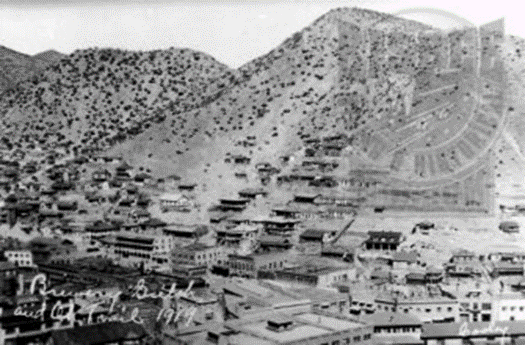
On July 3, 1919, active members of the Army’s segregated 10th Cavalry Regiment (“Buffalo Soldiers”) were in Bisbee, Arizona, to participate in the town’s Independence Day parade. In the early 20th century, Bisbee was a mining town with a history of racial stratification and unrest. The white residents actively discriminated against Arizona’s Mexican, Chinese, and African American laboring communities. It was a “sundown town” for Chinese Americans, and Black laborers had limited employment options.
With tensions high and discrimination rampant, it is not surprising that a fight broke out between a white policeman and a handful of Black soldiers in Brewery Gulch. According to a New York Times report about the violence in Bisbee, local white law enforcement “planned deliberately to aggravate the Negro troops so that they would furnish an excuse for police and deputy sheriffs to shoot them down.”
Add to the anxious times in the United States due to a slumping economy and fears of many white residents in the South who saw the emptying of their workforce during the Great Migration. Meanwhile, scarier and violent white residents met the new African American immigrants in the North with fears of taking jobs and integrating neighborhoods.”
Yet, I never knew about such heinous crimes in 1919 in my hometown of Omaha, Nebraska. Neither did my parents while they were growing up in the city nearby the Missouri River. My Dad, a college history major, learned of the horrors many years later. Perhaps my grandparents were aware since the paternal and maternal ancestors were making their way from the racially charged South to the Great Plains of Nebraska when the “Red Summer” was in full effect.
I never knew that the streets that I walked on in downtown Omaha, Nebraska – my hometown – in front of the Douglas County Courthouse were the scene of unspeakable deadly anger in 1919. I learned of the Red Summer during my college years. Somehow, the Red Summer facts unfolding to me as a college coed did not include Chicago or Omaha. It was 20 years later when I learned the horrific truth about the unlawful burning of a man’s body in front of an enraged white male mob. The crime committed by the 41-year-old rheumatism man who could not harm a fly: Allegedly assaulting a white woman.
Some of the crowd grinned while watching the burning of Will Brown’s body; Omaha, Nebraska, Sept. 28, 1919, Courtesy Nebraska State Historical Society, RG2281-69.
This series of racially disgusting tirades began in the spring in Georgia and continued through the summer and into October, ending with the most violent acts in Elaine and Helena, Arkansas. That area in the Arkansas Delta was where my ancestors lived. My grandfather, Samuel Luster Weed (later Wead), was 15 years old during the Red Summer, and he witnessed the infliction of horrors upon his family and neighbors. Somehow, his mother, Corrie Lee Weed, could get her children – especially her five sons – out of southeast Arkansas. Her husband, my great-grandfather, apparently was not as fortunate. Lost in the rubble of the riots, he remains one of the “brick wall” ancestors.
In all, more than 30 U.S. cities housed the race riots born from small, questionable activities to human rights freedoms. Cities included Charleston, South Carolina; Longview, Texas; Pittsburgh, Pennsylvania, Bisbee, Arizona; Washington, D.C.; Chicago; Knoxville, Tennessee; Omaha, Nebraska; and Elaine, Arkansas. More than 100 African Americans were lynched and killed in other ways. Two years later, Tulsa, Oklahoma, was one of the worst attempts to eradicate African Americans simply because they were considered prosperous.
Stringing together the stories and tragedies of the summer of 1919 has prompted thousands of media stories, numerous books, and articles in search of documenting and analyzing the war zones across the country.
Source: Chicago History MuseumSource: Unknown
The Good Guys
Hate is often colored by skin tone. Blacks can hate whites as much as whites hate their counterpart. Yet, there are always glimpses of a heartfelt and hearty word and works by people who fought against lynching, hate, and widespread discrimination against African Americans before 1919 and during Red Summer. Yet, some civility existed, as the photo below illustrates:
Couple moving during the 1919 Chicago Race Riots. Photograph by Jun Fujita, courtesy of Chicago History Museum, ICHi-65492
Your assignment: Sort through history books, statues, and historic sites in your hometown or nearby locations. Find out how and why racial riots occurred, and write about your findings.