Tag: Interviewing

  • Discovering Your Family’s Roots: Mastering the Art of Interviewing Relatives for Family Ancestry Stories

    Discovering Your Family’s Roots: Mastering the Art of Interviewing Relatives for Family Ancestry Stories

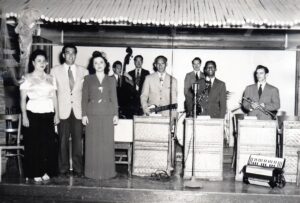
    Uncle Ernest Wilks
    Army Vet and Maternal Great Uncle Ernest Wilks (second right) and his band in Hawaii

    Gotta love the family stories!

    I’ve interviewed CEOs, community activists, a future U.S. Supreme Court justice, and lots of individuals who were skeptical of media members. It’s an art and a science to prepare for such sessions with individuals who are new acquaintances willing to share parts of their life stories to public audiences.

    Yet, no academic and OJT prepared me for asking personal questions of relatives to learn more about our family.

    “How did you and grandpa meet?” “What was it like to grow up in the Delta of Arkansas and witness the bloody riots in the early 1900s?” “Who are you named for?” “Did you really beat up a woman who knew your husband?” “Why didn’t you ever learn to drive?” “How did you celebrate Christmas when you were a child?”
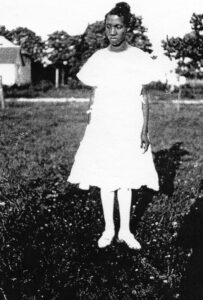
    Maternal great-grandmother Edna Wilks Robinson
    Maternal great-grandmother Edna Robinson

    Those are just a small sample of questions that I posed to my various family members. Their answers helped to connect the dots for me as I sought to uncover my family’s history. Like other African American families, our stories are mostly spotty and tough to easily put together. That’s why getting as much information from your relatives is imperative to completing your legacy findings.

    The art of the interviews

    The holidays and other special days are great times to listen to the conversations among family members. That’s the first tip: listen to what is being said and not said among your family member.

    Next, build upon the unanswered questions and ask questions. You may not get the answers you are seeking, yet you will get information, great stories, and usually surprises. Be as prepared as you able to be to receive unexpected surprise information. It helps if you can capture an audio recording. Some relatives, especially the older ones, are not as adverse to taped recordings as I once believed. They are actually the best ones to interview about family stories. Remember that great interviews are complimented by photographs. Take a lot of pictures that feature faces.

    Remember to be patient and expect to complete interviews over a span of time. It could be two days or even two years to gather the information you are seeking from family members.

    Pro tips

    • Prepare Thoughtful Questions
      Try to avoid the obvious awkward questions for starters.  Prepare open-ended questions to encourage storytelling. Ask about childhood memories, family traditions, and historical events they witnessed.
    • Find a Comfortable Setting
      Family stories often flow best in a relaxed environment.
    • You have to be a Great, Active Listener
      While you may have specific topics you want to cover, allow the conversation to naturally flow. Try to avoid interrupting unless necessary.
    • How to Handle Sensitive Topics
      Be mindful of how difficult, even painful that family experiences could be for your loved one. Acknowledge their feelings, respect their boundaries, and take a break.

    Preserving cultural and emotional history

    No matter what happens as you gather family stories, remember that you are recording precious history that perhaps no one will gather. You are preserving and documenting these stories, and thereby help your future generations.

    Contact me before or after you interview your relatives. Between my lived experiences and pro tips, I am here to help @weadwriteawayandgenealogy@gmail.com.


  • How to interview your family members

    It’s tough to ask tough questions


    Have you ever wanted to ask questions of your relatives and backed away because it was not “a good time?” We have.

    It’s time to get busy. Grab a notepad, make sure your audio and video recorders are sufficiently stocked with new batteries, put on your listening ears and initiate your family research.

    It may be uncomfortable for some relatives to open us. That’s natural. Learning what to ask and who to ask questions of, are key to your success. Before you get knee deep in researching family history, make a list of your prospective interview subjects by simply asking, “do you mind if I interview you (or discuss with you) about our family history?”

    Once you get to “yes,” you are on your way to discovering the gems and rough spots in your family.

    How to handle interviews

    You should seek information from everyone in your family, friends, neighbors, clergy, co-workers of your loved one. Whoever is willing to open up and share, are great informants.

    1. Often the oldest person you can speak to in your family, is the best source for robust information about your loved ones.
    2. Daughters and sons of elderly parents are often great sources of information to aid in your genealogy research.
    3. Neighbors, cousins and other relatives of all ages are great sources of information. Our maternal great grandfather’s delayed birth certificates lists a relative and neighbor as informants for Eugene Gibson Owen, Sr. to obtain his official documentation some 56 years after his birth. See below:
    Great Grandfather Eugene G. Owen, Sr.’s delayed birth certificate from the state of Tennessee. He was 56 years old when received.

    Who should your interview?

    1. Ask your interviewees if they are comfortable being recorded by video and audio devices, or other means. Negotiate for your best mutual benefits.
    2. This is not the time to pretend you are Oprah Winfrey or another celebrated interviewer who may garner as much attention as the interview subject.
    3. Remember that some matters are touchy subjects. Be sensitive to the questions that may not immediately or ever yield you answers from the person(s) you interview.
    4. Be humble. Humility goes a long way in family discussions.
    5. Listen. Listen. Hear them. Listen. Don’t overtalk your interview subject.
    6. Do not judge their comments. Their comments may not agree with today’s understanding of similar situations. For instance, some of our relatives stressed the importance of being silent against stiff situations involving racist behaviors towards them. Some interviewers may prefer to speak up, or vice versa in such situations.
    7. Organization matters. Establish your goals in interviewing your loved ones through a series of inquiries you have developed out of natural curiosity and “things” you may have heard or been told through family grapevines.
    8. Be flexible. Your established goals to glean certain information may not be forthcoming. In some cases, you may have to adapt your interview collection methods to meet your relatives where they are. For instance, I provided one of my loved ones with the opportunity to record their story. He mailed the cassette recordings to me. I had to locate a cassette player to download the important family data.

    Schedule time to meet

    The more your relatives age, the more questions arise about what the loved ones know that can add value to your family’s history.

    1. Schedule a mutually convenient time to hold a virtual or in person meeting.
    2. The interviewer should make the request and establish the approximate length of the meeting. In person meetings tend to be longer than online meetings. Allow for the extra time.
    3. Plan for multiple meetings to gain a wide berth of information about your family.

    Location matters

    1. Where you meet is key to the success of the information you obtain.
    2. In person meetings should also be guided by where the interviewee wishes to dish out the desired family information.
    3. In some cases, the interviewer may wish to recommend the location for the discussion. For instance, I asked my father to take the most comfortable chair in my home to begin our series of discussions. My maternal grandmother preferred a lunch date. My maternal grandfather was confined to a skilled nursing facility. That’s where I retrieved, we spent three days discussing our family.

    What you should ask

    There are myriad of questions to ask your loved ones in anticipation of great information about your family. One half of the Good Genes Genealogy team — Ann Wead Kimbrough — is a career journalist who’s interviewed perhaps thousands of individuals.

    1. Start with the basics in questions and allow it to build from there. The basic questions are “who, what, when, where, why and how?” Samples of what to objtain from your planned family discussions are found on the information sheets that Good Genes Genealogy Services has provided via its Genealogy Store.
    2. The questions provided in our e-workbook that was designed for the two workshops held on Feb. 11 and Feb. 18, 2023 in partnership with Atlanta’s Hillside International Truth Center, are designed to get at the core of the results needed to effectively conduct genealogy and ancestry research.

    Interpreting results

    It’s time to edit.

    1. Download your interviews onto another device as soon after your interviews as possible. In journalism circles, we were encouraged to review our reporting and begin writing while the information “was still hot.”
    2. Add notations in the margins of your written notes, or highlight your online reporting, or mark the time codes on your broadcast recording equipment when key points are made.
    3. Check out the information that you obtained. It is easy to get addresses or street names incorrect by your informants. There are plenty of historical maps, street directories, church records, ancestry, governmental and other data available to check the facts.
    4. In some cases, check back with the informants after interviews to help clarify the matters discussed.
    5. Produce your results in formats that are comfortable with you and family members. There are several genealogy books, other guides and even family Bibles that are great sources of recording the information from your well-earned interviews.

    Happy researching!